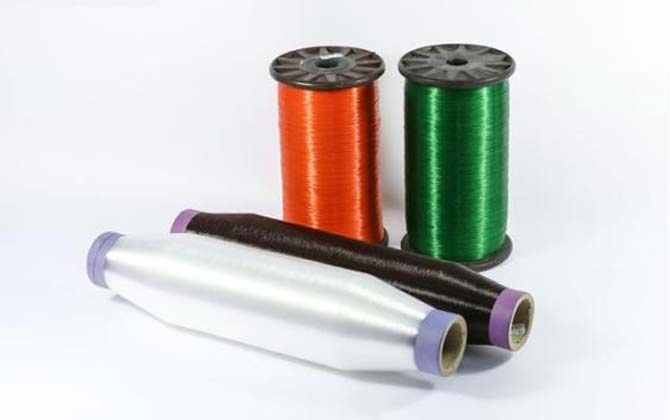
PBO fiber, a high-performance fiber jointly launched by Japan's Toyobo Corporation and the American Dow Chemical Company in 1998, is known as the "King of Fibers." PBO fiber comes in three types: AS, HM, and AS+.
PBO (polybenzobisoxazole) is a fully aromatic rigid rod-shaped polymer. There are no weak bonds in the PBO molecular chain. The conjugated polymer main chain formed between the benzobisoxazole group and the benzene ring will induce the resonance or delocalization effect of the π electrons, thereby promoting the overall stability of the structure.

Synthesis of PBO:
PBO can be synthesized by methods including dehydrochlorination, trimethylsilylation, and complex salts. The terephthalic acid method and terephthaloyl chloride methods are the most commonly used of the dehydrochlorination methods. The terephthalic acid method is currently the most commonly used in industrial production. PBO is synthesized by the polycondensation of 4,6-diaminoresorcinol hydrochloride (DAR) and terephthalic acid (PTA) in polyphosphoric acid (PPA). PBO is a lyotropic liquid-crystalline aromatic heterocyclic polymer. After pretreatment of the spinning solution, dry-jet wet spinning is used to spin the spun fibers. The spun fibers are then stretched, coagulated, washed, and dried to obtain PBO precursor (AS). The precursor is then heat-treated at high temperature under appropriate tension to produce PBO high-modulus fiber (HM).
Performance Characteristics:
PBO molecular chains are fully extended within the fiber and highly oriented along the axial direction. The molecules exhibit a high degree of conjugation, which imparts greater rigidity to the chains, ultimately resulting in exceptional tensile strength and modulus. The compressive strength of PBO fibers is less than 200 MPa. The lack of significant hydrogen bonding between the molecular chains makes them unstable under pressure, leading to kinking and subsequent fiber splitting and fibrillation. This contributes to their low compressive strength, which limits their application in structural composite materials. Due to the rigidity of the PBO fibers and the highly regular arrangement of their molecular chains, they possess excellent chemical resistance. Organic media have little effect on their strength, while strong alkaline solutions have limited impact. However, strong acids, particularly sulfuric acid, significantly affect their strength, not only reducing their strength but also increasing their dispersibility, likely due to their solubility in protic acids. PBO fibers are, to date, the most heat-resistant organic fibers, primarily due to their high rigidity and aromatic properties. In addition, it has better wear resistance, shear resistance and fatigue resistance than aramid.
We Value Your Privacy.
Our website uses cookies to improve your experience. By clicking "Accept All Cookies", you agree to the storing of cookies on your device to enhance site navigation, analyze site usage, and assist in our marketing efforts.

 English
 日本語
日本語 한국어
한국어 français
 Deutsch
 Español
 italiano
 русский
 português
 العربية
 tiếng việt