Environmental protection requirements in the tire industry extend throughout the entire product lifecycle: from raw material sourcing, manufacturing, use, and recycling. Companies are no longer facing voluntary "corporate social responsibility" (CSR) but rather legally enforceable "compliance" requirements.
Raw Material Acquisition Stage: Sustainability and Traceability Requirements
EU Zero Deforestation Directive (EUDR):
Requirements: Prohibits the placing on the EU market of goods (including natural rubber and its derivatives) linked to deforestation or forest degradation occurring after December 31, 2020. Operators must conduct due diligence and provide geographic information traceable to a single plot of land.
Impact: This is currently the biggest challenge facing the tire industry. It forces companies to establish highly transparent and traceable supply chains, starting with smallholder management, or risk losing access to the European market.
Sustainable Natural Rubber Initiatives:
Global Platform for Sustainable Natural Rubber (GPSNR): While not a mandatory regulation, it has become a de facto industry standard. Brands that join GPSNR (such as Michelin, Bridgestone, and Goodyear) require their suppliers to adhere to relevant environmental and social standards, driving change across the entire supply chain.
Certification systems: Certification by the Forest Stewardship Council (FSC), for example, provides evidence of sustainable rubber.
Chemical regulations (e.g., EU REACH):
Requirements: Strictly restrict the use of various chemicals in tire formulations (e.g., polycyclic aromatic hydrocarbons (PAHs) and plasticizers), which can pollute the environment after tire wear.
Impact: Driving companies to develop more environmentally friendly formulations and find alternative materials.
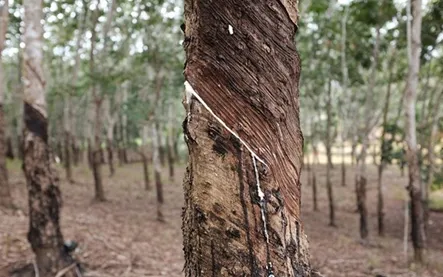
EUDR poses significant challenges to the tire industry. Tires are the largest consumer of natural rubber (accounting for over 70% of global production). EUDR's impact on the tire industry is systemic and revolutionary:
1. Extremely complex supply chain: The natural rubber supply chain is long and fragmented, with numerous links from smallholder farmers, middlemen, processing plants, traders, and finally tire factories. Achieving plot-level traceability from a small farm in Malaysia or Indonesia to a European tire shop is extremely challenging. 2. Smallholder dominance: Approximately 85% of global natural rubber is produced by smallholder farmers, whose plots are small, fragmented, and have low levels of digitalization. Collecting precise geographic information on these plots is a massive undertaking. 3. Blending and processing: During processing, rubber latex/lumps from different sources are often blended, significantly increasing the difficulty of tracing a single source. 4. Significant cost increases: Establishing traceability systems, conducting due diligence, purchasing satellite monitoring services, and hiring compliance personnel will significantly increase supply chain management and operational costs. 5. Compliance risk: Failure to provide a compliant due diligence declaration could result in a product being banned from the EU market, resulting in significant fines and reputational damage.
2. Specific Implementation Steps for Tire Companies to Meet EUDR Requirements: To comply with EUDR, tire companies (as "operators" or "traders") must take immediate action to build a comprehensive compliance system.
Phase 1: Strategic Preparation and Internal Governance
Establish a cross-departmental compliance team: Assemble a dedicated team comprised of procurement, sustainability, legal affairs, IT, supply chain management, and other departments, with direct senior management responsibility.
Comprehensive Supply Chain Mapping: Develop a complete natural rubber supply chain map, identifying all direct and indirect suppliers and tracing upstream all the way back to the plantation.
Develop an EUDR Compliance Policy: Clarify the company's commitments, goals, operational procedures, and supplier code of conduct.
Phase 2: Build a Traceability System (the core of the core) Technology Enablement:
Digital Maps and Geographic Information Systems: Require and enable upstream suppliers (especially plantations and primary processing plants) to collect and upload the precise geographic coordinates of rubber sources.
Blockchain Technology: Explore the use of blockchain to record the flow of rubber from farm to factory, ensuring data immutability and transparency.
Satellite remote sensing monitoring: Subscribe to satellite monitoring services (such as Global Forest Watch) to regularly monitor forest cover changes in source areas and automatically identify deforestation activity after December 31, 2020.
Supplier Management and Collaboration:
Rigorous supplier screening and training: Incorporate EUDR requirements into procurement contracts, build supplier capacity, and help them establish data collection systems.
Promote a "segregated" or "identity-preserved" supply chain model: Minimize the mixing of rubber from different sources and ensure that each batch can be traced back to a clear upstream source.
Prioritize collaboration with suppliers with sustainability certifications (such as FSC, PEFC, and GPSNR): While certification does not directly equate to EUDR compliance, it provides a sound management foundation and a lower-risk starting point.
Phase 3: Execute Due Diligence Process
1. Information Collection: For each batch of rubber or tires entering the EU, collect and store the following information:
Product description, quantity, supplier, and customer information.
Geographic coordinates of all source areas.
Production time and processing plant information.
2. Risk Assessment: Utilize the collected information and tools to conduct assessments:
Deforestation Risk: Use satellite imagery analysis to confirm that all plots have been free of deforestation since December 31, 2020.
Legal Compliance Risk: Verify that rubber production complies with relevant laws and regulations in the country of origin (e.g., land tenure, environmental permits, labor rights, etc.).
Risk Rating: Assess supply chain risk based on country/region risk (the EU publishes a list of high-risk countries) and supplier performance.
3. Risk Mitigation:
For low-risk suppliers and sources, streamline the due diligence process.
For high-risk sources, enhanced measures must be implemented, such as requiring suppliers to provide additional documentation, conducting third-party audits, or even suspending sourcing until the risk is reduced to an acceptable level.
Stage 4: Declaration, Reporting, and Continuous Improvement
Submit a Declaration: Submit a due diligence declaration through the official EU system before goods clear customs.
Recordkeeping: All information collected and measures taken during the due diligence process must be retained for at least five years.
Public Reporting: Proactively publish an annual sustainability report to disclose progress and challenges in achieving a deforestation-free supply chain, enhancing transparency and strengthening brand reputation.

We Value Your Privacy.
Our website uses cookies to improve your experience. By clicking "Accept All Cookies", you agree to the storing of cookies on your device to enhance site navigation, analyze site usage, and assist in our marketing efforts.

 English
 日本語
日本語 한국어
한국어 français
 Deutsch
 Español
 italiano
 русский
 português
 العربية
 tiếng việt