Rubber futures dropped across Asia as improved weather lifts supply, while weaker auto demand and rising costs weigh on the market.
What’s going on here?
Rubber prices slipped across Asia this week, with seasonal harvests adding supply and cautious carmakers pulling back orders, leading futures in Japan, China, and Singapore to lose ground.
What does this mean?
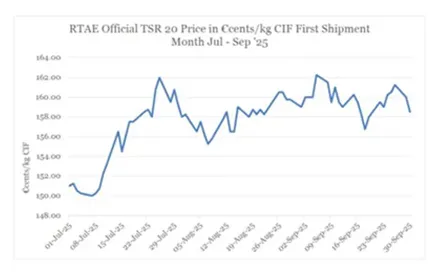
Rubber contracts on the Osaka Exchange slid over 2% for March delivery, marking a reversal of their earlier gains. Shanghai’s main contracts echoed the drop, with both January and November deliveries edging down about 1%. Industry analysts, including Helixtap Technologies, said a wave of profit-taking added to the pressure, even as producers continue to face elevated raw material costs. Improved weather across Southeast Asia is pushing more latex into the market just as demand from automakers remains uncertain. Cheaper oil is lowering synthetic rubber prices, creating stiff competition for natural rubber, while a stronger yen is making Japanese rubber exports less attractive. Ongoing concerns around chip supplies, thanks to trade frictions between China and the Netherlands, have also added another layer of uncertainty for rubber demand from the auto industry.
Why should I care?
For markets: Commodity prices face fresh headwinds.
The dip in rubber futures shows just how sensitive commodity markets are to shifting supply levels and wider economic forces. Softer oil prices are trimming synthetic rubber costs, dampening demand for natural rubber. On top of that, a stronger yen—up nearly 1% this week—is pinching Japanese exporters, potentially dragging down profits for tire and chemical firms. If this volatility sticks around, it could keep investors guessing and pressure stocks tied to the rubber value chain.
The bigger picture: Uncertainty runs through global supply chains.
Auto industry headwinds, especially ongoing chip shortages, continue to cast a shadow over global production lines. That spells trouble for rubber demand, since vehicles are a major end use. Meanwhile, a complicated mix of currency swings, rising supply, and shifting input costs highlights why global commodity producers and manufacturers are watching a broader set of risks than ever. In short, the fate of rubber increasingly depends on factors far beyond the plantation gate.

We Value Your Privacy.
Our website uses cookies to improve your experience. By clicking "Accept All Cookies", you agree to the storing of cookies on your device to enhance site navigation, analyze site usage, and assist in our marketing efforts.

 English
 日本語
日本語 한국어
한국어 français
 Deutsch
 Español
 italiano
 русский
 português
 العربية
 tiếng việt