Mumbai-based start-up looks to make tyres green and clean, all the while enhancing farmers’ income by converting waste cotton byproducts to biodegradable products for the rubber industry.
In a world steadily transitioning towards sustainable and environmentally conscious solutions, Indian startup Biopole is poised to revolutionise the tyre, rubber and broader automotive materials space with a breakthrough innovation that merges agritech, cleantech and chemical engineering. The company has introduced Biozone 200, a high-performance bio-based antiozonant that prevents rubber products from cracking due to ozone exposure. It is generally used in the rubber and tyre industry. On the other hand, Biovive 300 is a bio-based antioxidant that protects rubber and polymer products from oxidative degradation used in the rubber and tyre industry.
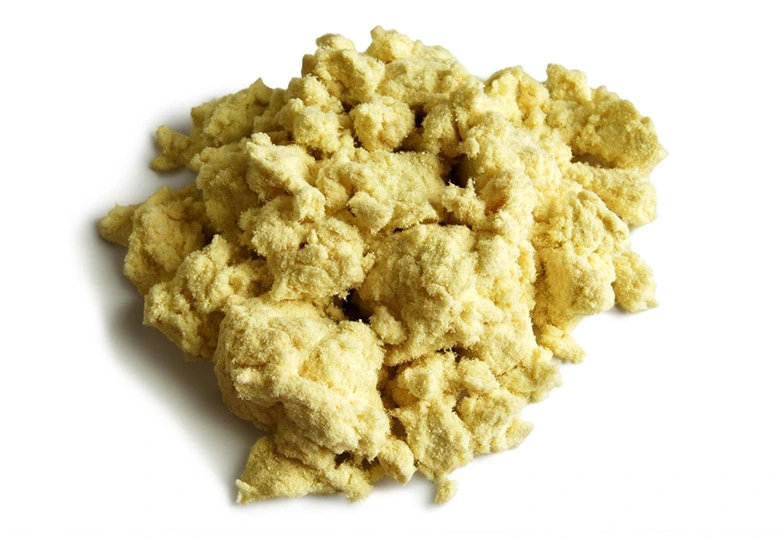
In contrast to traditionally sourced materials from petrochemical derivatives, these additives are made using sustainably sourced materials that play a crucial role in improving the durability and life of rubber products, including tyres, hoses, belts, seals, plastic and even footwear soles. The company’s new offering is derived from agricultural waste – specifically, cotton stalks.
In an interaction with Tyre Trends, Mehul Patel, Technical Director, Biopole, explained the development story: “What is Biopole? We provide bio-based antioxidants and antiozonants made from plants, more specifically cotton stalks, which are agricultural waste in India. After cotton is plucked, the stem or stalk is left behind, often burnt like stubble in North India. Instead of that, we extract useful chemicals from it to manufacture our solutions.”
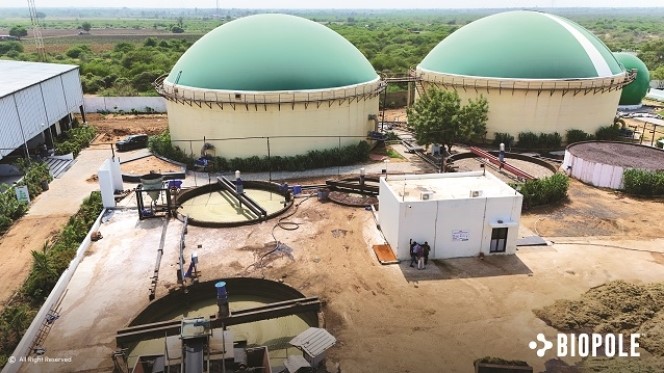
Interestingly, while the young start-up was started just a couple of months ago, it has already established its first manufacturing unit in Dudhapur, about 120 km north of Ahmedabad, in the heart of Gujarat’s cotton belt. It currently has an annual production capacity of 4,500 metric tonnes, with Biopole sourcing raw material from nearly 1,000 farmers across a 24-square-kilometre region.
“For these farmers, it’s waste, but for us, it’s the beginning of a high-value, eco-friendly product. And we pay them for it, so it’s a win-win,” he shared.
The company has invested INR 200-250 million over the past eight years to perfect the material and bring it to commercial scale. “More than money, it’s the time that was crucial. It took us eight years to reach a stage where we could modify the compound to be usable as a technical replacement for existing antioxidants and antiozonants,” averred Patel.
Antioxidants and antiozonants are indispensable for the rubber industry. They delay degradation caused by oxidation and ozone exposure, improving product longevity. However, their petrochemical origins are increasingly problematic in a market where regulatory and environmental considerations are paramount.
“Our product is REACH-compliant (European Union’s regulations for Registration, Evaluation, Authorisation and Restriction of Chemicals), ROHS-certified (Restriction of Hazardous Substances) and California Proposition 65 compliant. This is especially critical for Indian manufacturers looking to export to Europe and the US, where chemicals like 6PPD and TDQ (Trimethyl Dihydroquinoline), which are still widely used in India, are banned,” explained Patel.
Interestingly, giving an example of how Biopole is already acting as a gamechanger in the rubber industry, Patel shared that its product has already enabled one Kanpur-based footwear manufacturer to regain access to export markets after switching to Biopole’s solution.
“They were unable to export because of regulatory issues tied to traditional chemicals. After switching to our material and clearing lab tests, they are back in business and expanding their footprint to global markets,” Patel noted.
It is no secret that while that the topic of sustainability has been actively pursued, for any businesses to simply switch sourcing from traditional suppliers to alternative eco-friendly materials also needs to make economic sense.
This is exactly one of the USP propositions for Biopole’s antioxidants and antiozonants solution.
Cost, often a barrier to adoption in India, has been neutralised by Biopole’s approach. “While European companies are willing to pay a premium for sustainable products, Indian customers ask about price first. But our product is priced competitively. The usage level is very small, and even if our additive is slightly more expensive than traditional options, the overall impact on the rubber compound is just about INR 0.10 per kg,” said Patel.
Giving the instance of carbon black, Patel stated, “Take carbon black, for example. Its prices fluctuate between INR 95 and INR 120 per kg, which impacts the compound price by INR 0.25 to 0.40 per kilo. In our case, the delta is much smaller and we offer a sustainability advantage.”
Given that India’s tyre industry is a high-volume, slow-approval segment, Biopole has made a strategic decision to first focus on non-tyre rubber product manufacturers.
“Tyre companies typically take three to five years to approve a new additive. They also require volumes of around 150 tonnes per month. That would overwhelm our current capacity. So we are currently targeting non-tyre applications, where monthly usage is around 1-2 tonnes per customer. This allows us to onboard multiple customers and scale gradually,” he said.
But Biopole is not actually ignoring the tyre segment. “We have already initiated pilot testing with some tyre manufacturers. If even two tyre companies approve our material, our entire capacity could be absorbed. That is why we are also preparing for future expansions,” he revealed.
Expansion is very much on the horizon. Patel estimates that scaling up to 9,000 tonnes can be done within six to eight months. “Once the market demands it, we are ready to expand our capacity at the Ahmedabad plant. The process is now streamlined,” he says.
While Gujarat was the logical choice for its facility due to its raw material ecosystem, Biopole is also exploring international expansion. “We met potential partners in the US and Ivory Coast at the American Chemical Society conference. They were extremely excited. In fact, one gentleman said, ‘Come to Ivory Coast, we’ll provide you land and cotton stalks’,” he shared.
Responding to a query if the company is open to partnerships and contract manufacturing with local stakeholders investing in infrastructure and sourcing. Patel shared that for Biopole nothing is off the tables: “We’re open to partnerships as long as it makes commercial sense.”
We Value Your Privacy.
Our website uses cookies to improve your experience. By clicking "Accept All Cookies", you agree to the storing of cookies on your device to enhance site navigation, analyze site usage, and assist in our marketing efforts.

 English
 日本語
日本語 한국어
한국어 français
 Deutsch
 Español
 italiano
 русский
 português
 العربية
 tiếng việt